

 Call Us 01803 559028


Root Canal Treatment: Molar
Because molars can have multiple roots and variations in their canal anatomy, careful assessment and treatment planning are particularly important.
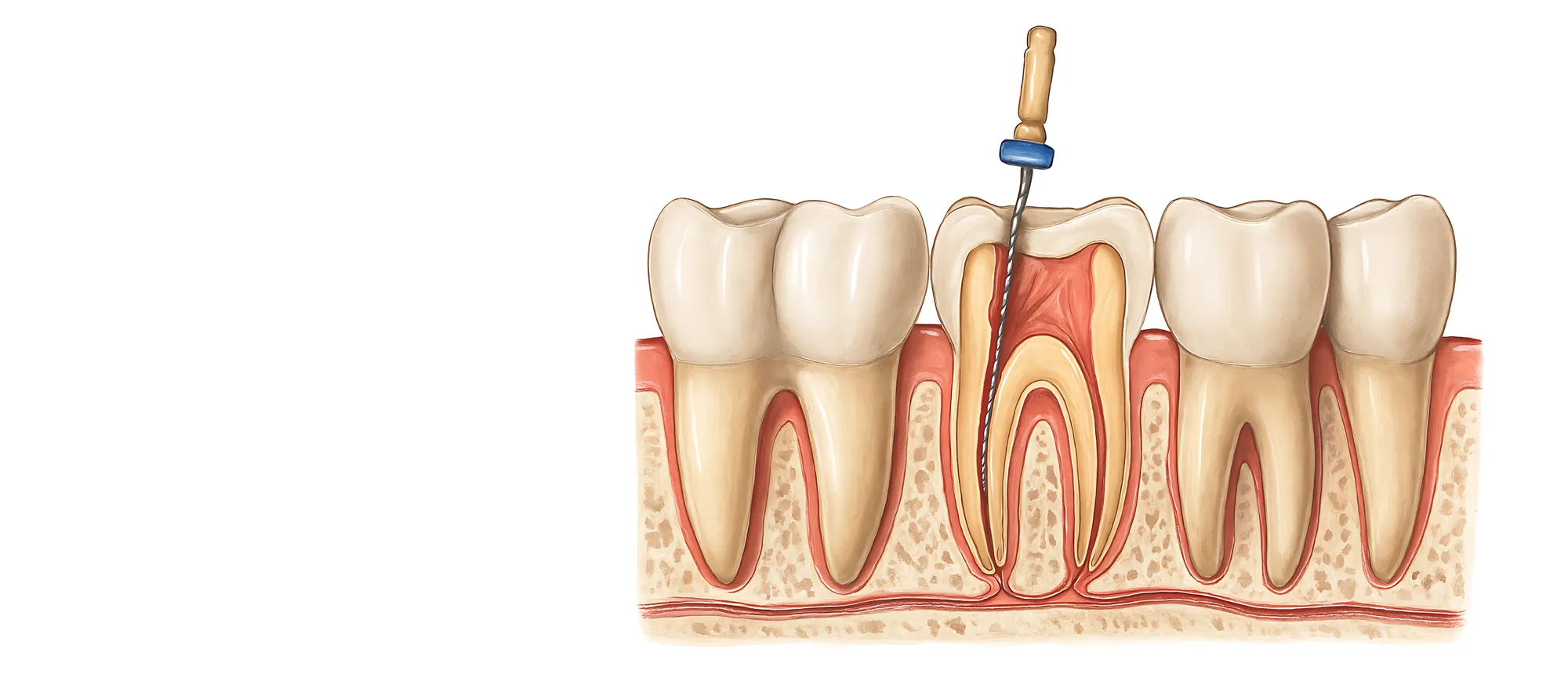
Molars are the large teeth at the back of the mouth that take much of the load during chewing. Their broad crowns are supported by roots containing a network of canals, and the internal anatomy can be considerably more involved than the visible shape of the tooth suggests.
Root canal treatment for a molar involves accessing this internal canal system when the pulp has become irreversibly inflamed or infected. The affected tissue is removed, the canals are cleaned and shaped, and the prepared spaces are filled and sealed.
Because molars can have multiple roots and variations in their canal anatomy, careful assessment and treatment planning are particularly important.
Why Do Molars Sometimes Need Root Canal Treatment?
A molar can develop pulp damage for several reasons. Deep decay can allow bacteria to reach the pulp, while a crack, fracture or previous dental procedure may also affect the tissues inside the tooth.
Signs that a molar may need assessment include:
- Persistent toothache
- Pain when chewing
- Sensitivity to hot or cold
- Tenderness around the tooth
- Swelling near the gum
- Repeated discomfort from a heavily restored tooth
Symptoms are not always a reliable indication of the extent of pulp damage. A molar can sometimes require assessment even when discomfort is limited.
Why Are Molars More Technically Demanding?
The visible crown of a molar may look relatively broad and straightforward, but the root canal system beneath it can be complex.
Molars commonly have multiple roots and may contain several canals. Canal shapes can vary, and some canals may be narrow, curved or difficult to locate. Variations between individual teeth mean that the treatment approach needs to be based on the anatomy identified during assessment.
This complexity can affect treatment planning, access and the time required for the procedure.
How Is a Molar Assessed Before Root Canal Treatment?
Your dentist will assess your symptoms and examine the tooth and surrounding tissues. Dental imaging can provide information about the roots and structures around the tooth and may be used when clinically appropriate.
The assessment can help determine whether the pulp is likely to be involved and whether the molar is suitable for root canal treatment and subsequent restoration.
The condition of the tooth above the gum is also important. A molar with extensive structural damage may require a different treatment discussion from one with substantial remaining tooth structure.
What Happens During Molar Root Canal Treatment?
Once the treatment has been planned and the tooth appropriately numbed, your dentist creates an opening through the crown to reach the internal canal system.
The canals are identified and carefully cleaned and shaped. The exact approach depends on the tooth's anatomy. Once the canals have been adequately prepared, they are filled and sealed.
The access opening is then restored. Because molars are exposed to substantial chewing forces, your dentist may discuss a suitable restoration to protect and rebuild the tooth, depending on how much structure remains.
Does a Molar Always Need a Crown After Root Canal Treatment?
Not necessarily. The appropriate restoration depends on the individual tooth.
Factors such as the amount of remaining tooth structure, existing restorations, the position of the tooth and its functional demands can influence the recommendation. A crown may be discussed in some cases, while another restoration may be appropriate in others.
Your dentist can assess the tooth after or during root canal treatment and explain the restoration options available.
What If the Molar Has a Crack?
A cracked molar needs careful assessment because not every crack affects the tooth in the same way.
A crack may involve different parts of the tooth, and its depth and location can influence whether the tooth can be restored. If the pulp has also been affected, root canal treatment may form part of the treatment plan.
However, root canal treatment does not repair every type of crack. Your dentist will assess the tooth and explain whether it appears suitable for treatment and restoration.
Can a Molar Root Canal Be More Than One Appointment?
Yes. The number of appointments depends on the individual case.
Factors such as the number and shape of canals, the condition of the pulp, the presence of infection and the complexity of the tooth can affect how treatment is organised. Some cases may be completed in one appointment, while others may be divided across multiple visits.
Your dentist can explain the proposed treatment sequence before starting.
Looking After a Molar After Root Canal Treatment
A treated molar can feel tender following treatment. Follow the instructions provided by your dentist, particularly if a temporary restoration has been placed while further treatment is planned.
Continue brushing and cleaning between your teeth as advised. Once the definitive restoration has been completed, maintaining good oral hygiene and attending regular examinations remain important.
Contact your dental practice if you develop persistent or worsening pain, swelling or another unexpected change.
What If a Molar Cannot Be Saved?
Root canal treatment is considered when a tooth is suitable for treatment and restoration. However, some molars may have extensive structural damage or other problems that make them unsuitable for predictable restoration.
In such circumstances, your dentist may discuss extraction and the options for managing the resulting space. The appropriate decision depends on the condition of the individual tooth and the surrounding oral tissues.
Frequently Asked Questions
Why Are Molar Root Canals Often More Complicated?
Molars generally have multiple roots and can contain several canals, with variations in their size, shape and position. Some canals may also be narrow or curved. This means the dentist needs to identify and treat the relevant canal system rather than assuming a simple internal arrangement. The complexity varies between individual teeth, so the exact treatment requirements can only be determined after assessment and appropriate imaging where indicated.
Can a Molar Have an Infection Without Severe Pain?
Yes. Dental problems involving the pulp and tissues around a tooth do not always cause severe or continuous pain. Some people may experience intermittent symptoms, tenderness or little noticeable discomfort. This is why changes such as swelling, sensitivity or a persistent problem with a molar should be assessed even if the pain is not severe. Your dentist can investigate the tooth and determine whether the pulp or surrounding tissues are affected.
How Many Appointments Are Needed for a Molar Root Canal?
There is no fixed number of appointments for every molar. Treatment may be completed in one appointment in some cases, while other teeth require more than one visit. The number of canals, their anatomy, the condition inside the tooth and the presence of infection can all influence the treatment plan. Your dentist can explain how your treatment is expected to be organised after examining the tooth.
Will I Need a Crown After a Molar Root Canal?
A crown may be recommended for some root-treated molars, but it is not automatically required in every case. Your dentist will consider the amount of remaining tooth structure, the condition of the tooth and how it will function when deciding on an appropriate restoration. Other restorative options may be suitable depending on the individual circumstances. The restoration should be discussed as part of the overall treatment plan.
Can a Cracked Molar Still Have Root Canal Treatment?
It depends on the type, location and extent of the crack and whether enough sound tooth structure remains for the tooth to be restored. If the crack has affected the pulp, root canal treatment may be considered as part of the treatment plan. However, root canal treatment does not make every cracked tooth restorable. Your dentist will assess the tooth and explain whether it can reasonably be treated and restored or whether another option should be considered.
Root Canal Treatment for Molars at GreenTree Dental & Implant Clinic
Pain from a back tooth can have several possible causes, and an examination is needed to determine whether the pulp is involved. At GreenTree Dental & Implant Clinic, your dentist can assess the affected molar, consider its root and canal anatomy and discuss whether root canal treatment is an appropriate option. The condition of the remaining tooth structure and the restoration required afterwards can also form part of the treatment discussion. If you have ongoing pain, sensitivity or discomfort when chewing, arrange an assessment so the cause can be investigated.
Ready for a Healthier, Happier Smile?
Book today and spread the cost of your treatment with 0% APR finance.
Subject to status. UK residents aged 18+. Minimum and maximum spend applies. T&Cs apply.


Contact Us
Have a question or ready to book your consultation? Our friendly reception team is here to help.
Opening Hours
Send Us a Message
We usually reply within one working day.
Visit Us
GreenTree Dental & Implant Clinic
31 Hyde Road, Paignton, Devon TQ4 5BP
Call Us
01803 559028Opening Hours
Monday to Friday: 8:30am–5:30pm
Saturday and Sunday: Closed


