

 Call Us 01803 559028


Wisdom Tooth Extraction
Wisdom tooth extraction involves removing the affected tooth when your dentist determines that extraction may be appropriate.
Wisdom teeth are the final set of molars to develop at the back of the mouth. They usually emerge during the late teenage years or early adulthood, although the timing and pattern of eruption can vary.
For some people, a wisdom tooth may erupt into a position where it can be cleaned and maintained. For others, there may be limited space, an unusual angle of eruption or partial coverage by gum tissue. These factors can sometimes make the tooth more difficult to clean or contribute to dental problems.
Wisdom tooth extraction involves removing the affected tooth when your dentist determines that extraction may be appropriate. Depending on its position and how much of the tooth has erupted, removal may involve a routine extraction or a surgical approach.
Having a wisdom tooth does not automatically mean that it needs to be removed. Your dentist can assess the tooth, its surrounding tissues and nearby teeth before discussing whether monitoring or removal may be appropriate.
Why Might a Wisdom Tooth Need to Be Removed?
A wisdom tooth may require assessment when it is causing symptoms or is associated with a dental problem.
Possible reasons for considering extraction include:
- Repeated inflammation around a partially erupted wisdom tooth
- Tooth decay affecting the wisdom tooth
- Gum problems around the tooth
- Food becoming trapped around a partially erupted tooth
- Damage or decay affecting a neighbouring tooth
- A wisdom tooth that is difficult to clean
- Certain changes around the tooth identified during examination or imaging
The presence of one of these factors does not necessarily mean extraction is the only option. Your dentist will consider your individual circumstances before recommending treatment.
What Is an Impacted Wisdom Tooth?
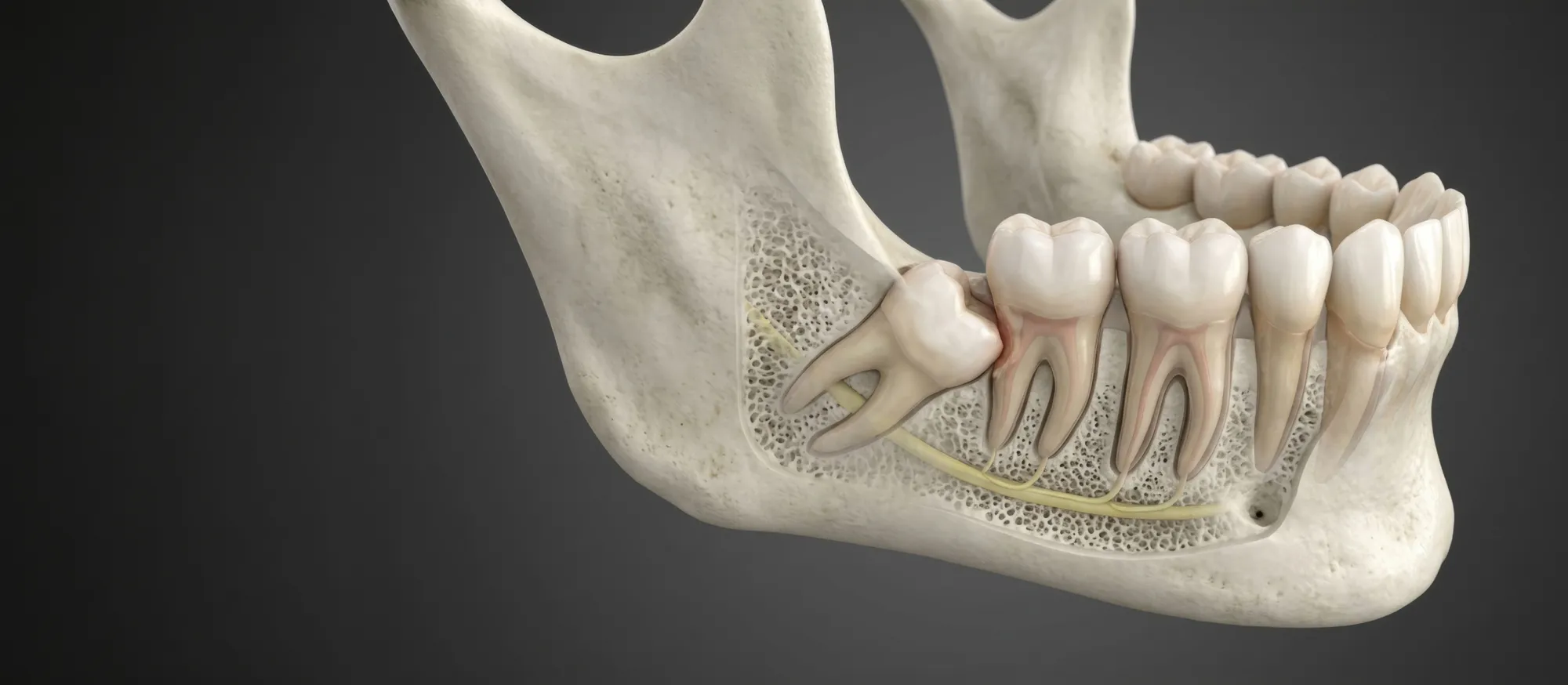
A wisdom tooth is described as impacted when it does not erupt into its expected position because its path is restricted.
An impacted tooth may remain partly or completely beneath the gum. It can also develop at an angle rather than following the normal direction of eruption.
Some impacted wisdom teeth may cause symptoms, while others may not. Your dentist can assess the position of an impacted tooth and discuss whether monitoring or treatment may be appropriate.
Can a Wisdom Tooth Be Left in Place?
In some circumstances, a wisdom tooth may be monitored rather than removed.
Your dentist may consider factors such as whether the tooth is causing symptoms, whether it can be kept clean, its position and the condition of the surrounding teeth and tissues.
If there is no current reason to remove the tooth, your dentist may discuss monitoring it as part of your ongoing dental care.
If problems develop later, the tooth can be reassessed.
How Is a Wisdom Tooth Assessed?
Your dentist will examine the wisdom tooth and the surrounding area. They may check the gum tissue, neighbouring teeth and how much of the wisdom tooth has erupted.
An X-ray may be recommended when additional information about the tooth's position, roots or surrounding structures is needed.
The type of imaging used depends on the clinical circumstances. Your dentist can explain why imaging may be recommended and how it may help with treatment planning.
Does Every Wisdom Tooth Extraction Require Surgery?
No. The type of extraction depends largely on how accessible the wisdom tooth is.
A fully erupted wisdom tooth that can be accessed appropriately may sometimes be removed using a conventional extraction technique.
If the tooth is impacted, partially covered by gum or bone, or difficult to access, a surgical approach may be required. This can involve making an incision in the gum, removing a small amount of bone or dividing the tooth into sections.
Your dentist can explain the proposed approach after assessing your wisdom tooth.
What Happens During Wisdom Tooth Extraction?
The area around the tooth is usually numbed with local anaesthetic before extraction.
For a straightforward extraction, the dentist can use appropriate instruments to loosen and remove the tooth.
If a surgical approach is needed, the dentist may make an incision to access the tooth. Depending on its position, a small amount of surrounding bone may need to be removed, or the tooth may be divided into sections to assist with removal.
Once the tooth has been removed, the area is managed according to the procedure. Stitches may be placed where appropriate.
The exact steps vary from one wisdom tooth to another.
What If My Wisdom Tooth Is Close to Important Structures?
Wisdom teeth, particularly lower wisdom teeth, can sometimes be positioned close to nerves or other anatomical structures.
An X-ray can provide information about the position of the tooth and its roots. In some cases, further imaging may be considered if your dentist needs more information for treatment planning.
If the tooth presents particular anatomical or clinical considerations, your dentist can explain these to you and discuss whether referral to another dental professional may be appropriate.
What Is Recovery Like After Wisdom Tooth Extraction?
Recovery varies depending on the tooth, the type of extraction and individual factors.
Tenderness and swelling are common considerations following wisdom tooth removal, particularly where a surgical approach has been used. Some people may also experience bruising or temporary difficulty opening their mouth.
Your dental team will provide instructions for looking after the extraction site. These may include advice about eating, cleaning your teeth, physical activity and any medication that has been recommended or prescribed.
Follow the specific instructions given to you, as aftercare can vary between procedures.
What Can I Eat After Wisdom Tooth Removal?
Your dentist will advise you about eating after the procedure. Softer foods may be easier to manage during the early part of recovery.
You may also be advised to avoid foods or drinks that could irritate or disturb the extraction site.
As the area heals, you can gradually return to your usual diet according to your comfort and your dentist's advice.
If you are unsure about what you can eat or drink following your particular procedure, ask your dental team for guidance.
How Should I Clean My Mouth After Extraction?
Keeping your mouth clean is an important part of caring for your remaining teeth and gums after an extraction.
Your dentist will explain how to brush and clean around the extraction site without disturbing it. You may receive additional instructions depending on the type of extraction performed.
Avoid putting your fingers or other objects into the extraction site. If you have been given specific instructions about rinsing or cleaning, follow those provided by your dental team.
When Should I Contact My Dentist?
Some discomfort and swelling can occur after wisdom tooth extraction. However, you should contact your dental practice if you experience symptoms that concern you.
These may include significant or persistent bleeding, increasing swelling, worsening pain, fever or other unexpected symptoms.
Your dental team can assess the situation and advise whether further care may be needed. If you have been given specific emergency or out-of-hours instructions, follow those provided by your practice.
Frequently Asked Questions
Do All Wisdom Teeth Need to Be Removed?
No. Having a wisdom tooth does not automatically mean that extraction is required. Your dentist can assess its position, condition and relationship with the surrounding teeth and tissues. If the tooth is not currently causing a problem and can be monitored appropriately, removal may not be recommended. If symptoms or dental problems develop, your dentist can reassess the tooth and discuss the available options with you.
What Are the Signs That a Wisdom Tooth May Be Causing a Problem?
Symptoms can vary, but possible signs include pain or tenderness at the back of the mouth, swelling around the gum, difficulty cleaning the area, food becoming trapped or discomfort when opening the mouth. A wisdom tooth can also be associated with dental problems without causing obvious symptoms. If you have concerns about a wisdom tooth, an examination can help determine what may be causing the problem and whether further assessment is needed.
Is Wisdom Tooth Extraction Always a Surgical Procedure?
No. The type of extraction depends on the position and accessibility of the wisdom tooth. A fully erupted tooth that can be accessed appropriately may sometimes be removed using a conventional extraction technique. A partially erupted or impacted tooth may require a surgical approach involving additional access to the tooth. Your dentist can explain which approach may be appropriate after examining the tooth and reviewing any necessary imaging.
How Long Does It Take to Recover After Wisdom Tooth Extraction?
Recovery varies between individuals and depends on factors such as the position of the wisdom tooth and whether the extraction was straightforward or surgical. Tenderness and swelling may occur during the healing period. Your dentist will provide aftercare instructions and explain what you may expect following your particular procedure. If symptoms are worsening or you are concerned about your recovery, contact your dental practice for advice.
Can a Wisdom Tooth Affect the Tooth Next to It?
A wisdom tooth can sometimes be positioned in a way that affects the area around the neighbouring second molar. For example, food may become trapped between the teeth, or the neighbouring tooth may be more difficult to clean. Your dentist can examine both teeth and use appropriate imaging where needed to assess their relationship. If there is a concern, they can discuss whether monitoring, treatment or extraction may be appropriate.
Wisdom Tooth Extraction at GreenTree Dental & Implant Clinic
If you have pain, swelling or other concerns around a wisdom tooth, GreenTree Dental & Implant Clinic can assess the tooth and surrounding area. Your dentist can discuss whether the wisdom tooth may be monitored or whether extraction should be considered. If removal is recommended, they can explain whether a routine or surgical approach may be appropriate based on the tooth's position and condition.
Ready for a Healthier, Happier Smile?
Book today and spread the cost of your treatment with 0% APR finance.
Subject to status. UK residents aged 18+. Minimum and maximum spend applies. T&Cs apply.


Contact Us
Have a question or ready to book your consultation? Our friendly reception team is here to help.
Opening Hours
Send Us a Message
We usually reply within one working day.
Visit Us
GreenTree Dental & Implant Clinic
31 Hyde Road, Paignton, Devon TQ4 5BP
Call Us
01803 559028Opening Hours
Monday to Friday: 8:30am–5:30pm
Saturday and Sunday: Closed


