 Call Us 01803 559028



Losing a tooth, or several teeth, can affect the way you eat, speak and feel about your smile. The good news is that there is usually more than one way to replace missing teeth. Dental implants, bridges and dentures are three of the main options, and each works in a different way.
No single option is right for everyone. The most appropriate choice depends on the condition of your teeth, gums and bone, the number and position of the missing teeth, your bite and your own preferences. This guide explains how each option works and the questions your dentist will consider.
Why Replace a Missing Tooth?
A missing tooth can affect chewing and may also allow neighbouring teeth to move into the space over time. Depending on where the gap is, it can also change the appearance of your smile.
Tooth loss can happen for several reasons, including tooth decay, gum disease, dental trauma and excessive tooth wear.
Dental Implants
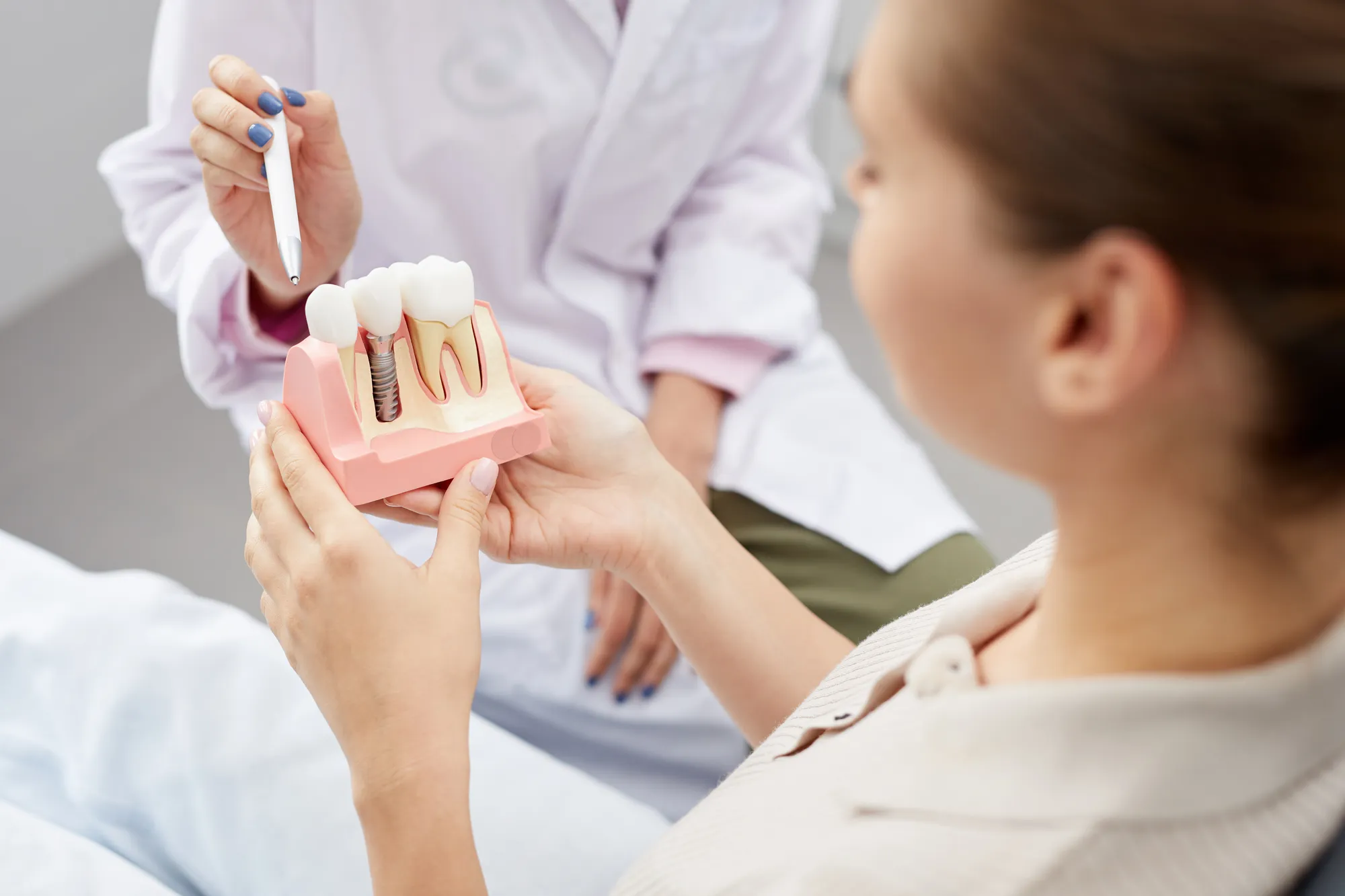
A dental implant is a titanium fixture that is placed into the jawbone to replace the root of a missing tooth. Once the implant has integrated with the surrounding bone, it can support a restoration such as a crown for a single missing tooth or a bridge where more than one tooth needs replacing.
Points to be aware of include:
- Fixed replacement: once treatment is complete, an implant-supported restoration is fixed in place rather than removed like a conventional denture.
- Supporting the jawbone: when a natural tooth is lost, the bone that supported it can gradually deteriorate. An implant replaces the root and can help maintain bone around the implant site.
- Treatment in stages: the implant needs time to integrate with the bone before the replacement tooth can be fitted. Overall treatment time varies between patients.
- Suitability: implants are not automatically suitable for every patient. The available bone at the implant site and the health of your teeth and gums are important, and problems such as active gum disease or untreated decay may need to be addressed first.
If you feel anxious about treatment, conscious dental sedation can be discussed with suitable patients.
Dental Bridges
A dental bridge is a fixed restoration designed to replace one or more missing teeth. The artificial tooth, known as a pontic, fills the gap, and the bridge is supported by neighbouring teeth or other suitable structures.
A porcelain-bonded bridge typically consists of a metal framework covered with tooth-coloured porcelain. The porcelain is designed to give a natural-looking appearance, while the framework provides support.
Things to consider include:
- Fixed in place: unlike a removable denture, a conventional bridge is designed to stay in your mouth.
- The supporting teeth: the teeth that support the bridge may need to be prepared so that it can fit securely, so their condition is an important part of the assessment.
- Several appointments: treatment usually involves an assessment, preparation and impressions, then a fitting appointment where the fit, appearance and bite are checked.
- Cleaning: you will need to clean carefully around and underneath the bridge, and your dental team can show you suitable techniques and cleaning aids.
Dentures
Dentures are removable appliances designed to replace missing teeth. Full dentures can replace all the teeth in one or both arches, while partial dentures are designed to fit around the natural teeth that remain. Depending on your needs, dentures can be made in different materials, including acrylic, chrome and flexible options.
Where all the teeth in both arches are missing, full upper and lower dentures may be one of the options available. They are made to suit the shape of your mouth, the supporting tissues and the way your upper and lower arches meet.
Things to consider include:
- Removable: dentures can be taken out for cleaning and as advised by your dental team.
- Getting used to them: new dentures can feel unfamiliar at first, and speaking and eating may feel different while you adjust. Everyone adapts differently.
- Adjustments: if you experience persistent soreness or difficulty keeping a denture in place, your dentist can assess the fit and consider adjustments.
How Do the Options Compare?
Each option has advantages and limitations, and the right balance is different for every patient. When comparing them, it can help to think about:
- Whether you would prefer a fixed or a removable replacement
- The condition of the teeth next to the gap
- The health of your gums and the bone available
- How many teeth need replacing and where they are
- The number of appointments and the overall treatment time involved
- How you would care for the replacement day to day
In some cases, options can be combined; for example, implants can support a bridge where more than one tooth needs replacing.
How Your Dentist Will Help You Decide
Your treatment starts with an assessment of your teeth, gums, bite and overall oral health. Your dentist will discuss your concerns, your dental history and what you would like to achieve, and may recommend dental imaging to provide more information.
They can then explain which options may be suitable, along with the advantages and limitations of each, so that you can make an informed decision. If one option is not appropriate, your dentist can talk you through the alternatives.
Looking After Your Replacement Teeth
Whichever option you choose, good oral hygiene remains important. Regular dental examinations and hygiene appointments allow your dental team to monitor your replacement teeth and the natural teeth and gums around them. Contact the practice if you notice discomfort, damage or any unexpected change.
Speak to Our Team in Paignton
If you have one or more missing teeth and would like to understand your options, the team at GreenTree Dental & Implant Clinic can assess your oral health and discuss the tooth replacement options that may be suitable for you.
To arrange an appointment, call us on 01803 559028 or visit us at 31 Hyde Road, Paignton, Devon TQ4 5BP.


